
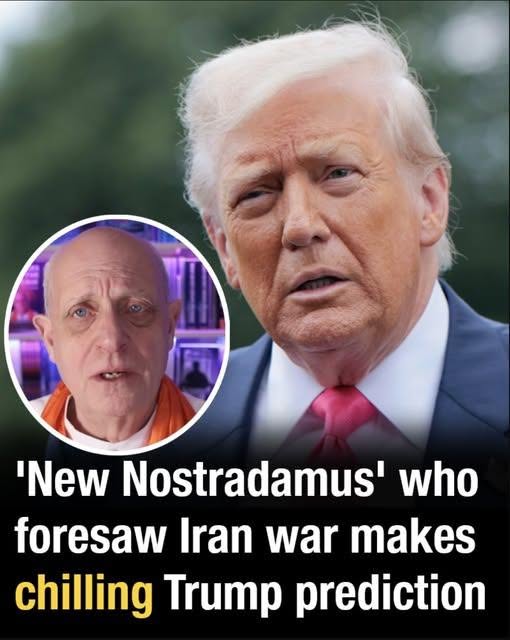
A self-styled forecaster often referred to online as the “New Nostradamus” has once again captured public attention after making a dramatic prediction involving former U.S. President Donald Trump. The prediction, which spread rapidly across social media platforms, has generated thousands of reactions and fueled intense debate among supporters, critics, and political observers alike.
The prediction emerged amid growing international tensions and renewed discussion surrounding conflicts in the Middle East. According to posts circulating online, the forecaster claimed that recent global events could lead to major political developments involving Trump and the future of American leadership. While the statements quickly attracted attention, no credible evidence has been presented to support the prediction.
Why the Prediction Went Viral
Predictions about world leaders often gain traction during periods of uncertainty. Political tensions, economic concerns, and international conflicts create an environment where many people look for explanations—or even forecasts—about what might happen next.
As a result, videos and articles discussing the prediction accumulated significant engagement. Some users viewed the forecast as an intriguing possibility, while others dismissed it as speculation designed to attract attention.
Experts note that predictions tied to famous figures frequently spread because they combine public curiosity with current events. When well-known political leaders are involved, online discussions can grow rapidly regardless of whether the claims are supported by facts.
The Legacy of Nostradamus-Style Predictions
The comparison to Nostradamus is not unusual. For centuries, people have attempted to interpret vague predictions and connect them to major historical events. Many modern commentators adopt similar styles, making broad forecasts that followers later try to link to real-world developments.
Historians and researchers, however, often caution against treating such predictions as reliable forecasts. Vague language can be interpreted in many different ways, making it easy for people to connect predictions to events after they occur.
Trump’s Continued Influence
Donald Trump remains one of the most influential and closely watched figures in American politics. Every public statement, campaign appearance, and policy proposal receives significant media coverage. Because of his prominence, predictions involving Trump often receive far more attention than those involving less recognizable figures.
Political analysts say that Trump’s influence extends well beyond election cycles. Supporters view him as a transformative leader, while opponents continue to criticize his policies and rhetoric. This high level of public interest helps explain why any prediction involving him can quickly become a major online topic.
Experts Urge Caution
Fact-checkers and political analysts recommend approaching dramatic predictions with skepticism. They emphasize the importance of relying on verified information, official statements, and credible reporting rather than speculative forecasts.
While predictions can be entertaining and thought-provoking, experts warn that they should not be confused with factual reporting. Many forecasts that gain widespread attention ultimately fail to materialize.
Public Reaction
Online reactions to the latest prediction have been mixed. Some individuals believe the forecast could prove accurate, citing previous claims made by the forecaster. Others argue that the prediction is too vague to evaluate and lacks evidence.
The debate highlights a broader trend in the digital age: dramatic claims can travel around the world within minutes, generating millions of views before their accuracy is ever examined.
Looking Ahead
Whether the prediction turns out to be meaningful or simply another viral internet sensation remains to be seen. For now, it serves as a reminder of the powerful role that social media plays in shaping public conversations about politics, global events, and the future.
As discussions continue, observers agree on one point: extraordinary claims require extraordinary evidence, and only time—not predictions—can reveal what the future holds.