
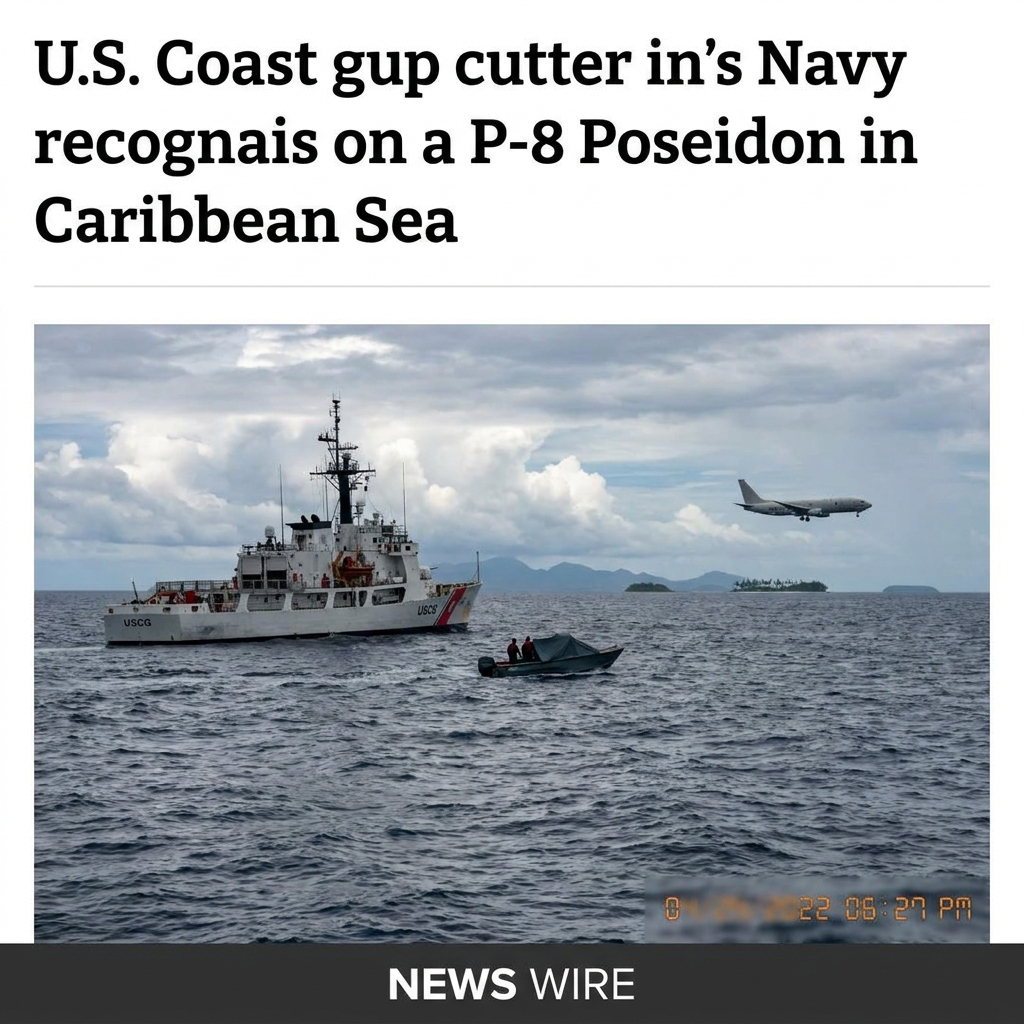
WASHINGTON — The United States has carried out another deadly operation against a vessel the U.S. military says was operating along suspected narco-trafficking routes in the Caribbean.
U.S. Southern Command said Wednesday that three people were killed during the strike.
Reuters reported that it could not independently verify the military’s announcement at the time of publication, and details about the vessel and the identities of those killed remained limited.
The incident comes as the Trump administration continues to pursue a more aggressive approach toward international drug trafficking.
The operation is part of a broader strategy that combines military pressure with cooperation from governments across Latin America.
Rubio Defends the Strategy
Secretary of State Marco Rubio addressed the administration’s anti-drug campaign during a visit to Ecuador.
Rubio said the United States is working with partner countries but emphasized that Washington is still prepared to use military force when necessary.
He described the strategy as one that combines cooperation with direct action.
According to AP, recent operations have included U.S. forces removing people from vessels and transferring them to local authorities before destroying the vessels.
That represents an important aspect of the administration’s broader policy.
Rather than treating drug trafficking purely as a law-enforcement issue, Trump officials increasingly describe powerful trafficking organizations as national-security threats.
Why the Caribbean Matters
The Caribbean has long been an important transit region for illegal drugs moving toward the United States and other markets.
Its geography makes it difficult for authorities to monitor every vessel traveling between South America, Central America and the United States.
Drug trafficking organizations can use remote maritime routes to avoid detection.
The U.S. therefore relies on surveillance, intelligence sharing, coast guard operations and cooperation with regional governments.
Military strikes represent a much more aggressive step.
Ecuador Becomes a Key Partner
Rubio’s comments came during his visit to Ecuador, where President Daniel Noboa’s government has adopted a tough position against organized crime.
The United States has increasingly viewed Ecuador as an important security partner.
Rubio praised Ecuador’s efforts against drug trafficking and terrorism.
The administration also designated the Ecuadorian gang Los Tiguerones as a foreign terrorist organization, opening the possibility of stronger U.S. action against the group.
The Trump administration plans to seek congressional funding for additional counter-narcotics cooperation.
Why This Is Different From Previous Drug Policies
American governments have fought drug trafficking for decades.
What makes the current strategy notable is the willingness to publicly discuss military force against suspected trafficking operations.
The administration argues that major drug organizations have become sufficiently powerful to threaten national security.
Critics, however, are likely to question the evidence and legal framework surrounding military strikes.
A major issue will be how authorities identify targets.
A vessel being suspected of trafficking does not automatically establish that every person aboard is a combatant or that lethal force is legally justified in every circumstance.
That makes transparency and evidence especially important.
The Caribbean Operation Raises Questions
The latest strike raises several unanswered questions.
What type of vessel was targeted?
What evidence did U.S. authorities have that it was involved in drug trafficking?
Were the people aboard armed?
Was there an attempt to intercept or board the vessel?
What intelligence was used to identify it?
At the time of early reporting, many of these details were not publicly available.
That means the incident should be viewed as an announced military operation rather than a fully established account of everything that happened.
A Broader Regional Strategy
The United States is also increasing security cooperation with governments in Latin America.
Washington wants regional governments to strengthen their own capacity to fight organized crime before criminal groups become even more powerful.
This strategy is particularly important because drug trafficking networks often operate across multiple borders.
A shipment can originate in one country, move through another and eventually enter the United States through a third route.
No single country can easily dismantle such networks alone.
What Comes Next?
The Caribbean strike is likely to intensify debate over how far the United States should go in using military force against drug trafficking.
Supporters argue that cartels and trafficking organizations have become powerful enough to require stronger action.
Critics will likely demand greater transparency, legal justification and independent verification.
The Trump administration appears determined to continue the campaign.
For now, the biggest unanswered question is whether military strikes will significantly disrupt trafficking networks or simply push them toward new routes.
That question will become increasingly important as Washington expands cooperation with governments across the region.
Important reporting note: The initial U.S. military announcement was not independently verified by Reuters at publication time.