
Trump, Xi and Putin End Historic Nuclear Summit Without Major Arms-Control Deal
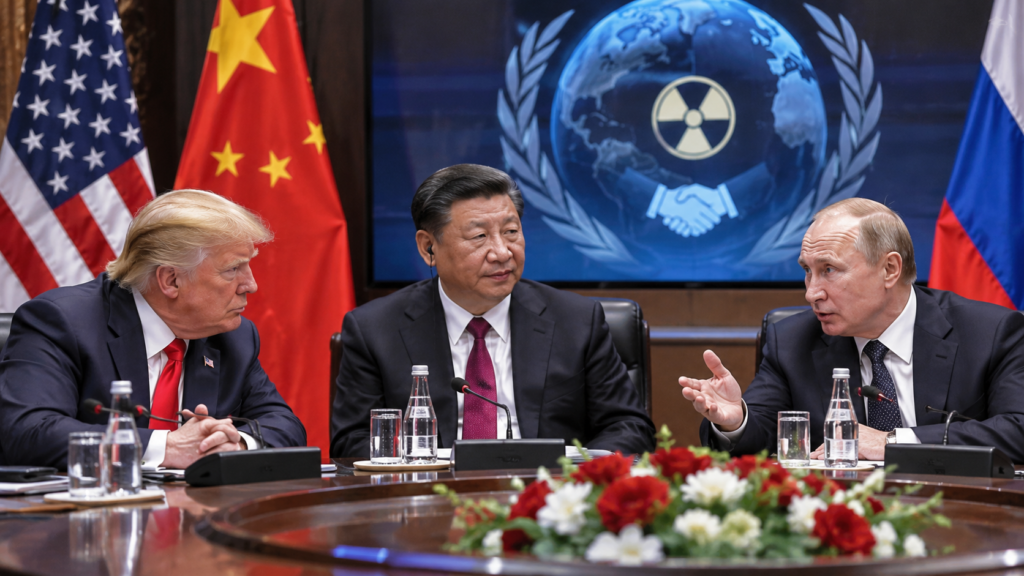
President Donald Trump, Chinese President Xi Jinping and Russian President Vladimir Putin concluded an unprecedented three-way summit in Shenzhen, China, on November 19 with a joint declaration on nuclear risks but no concrete agreement to reduce their countries’ nuclear arsenals.
The leaders described the gathering as an important diplomatic moment and reaffirmed that “a nuclear war cannot be won and must never be fought.” They also pledged to continue dialogue on reducing nuclear risks and preventing the spread of nuclear weapons. However, the declaration did not set a timetable for negotiations, specify reductions in warheads or establish a new arms-control framework.
According to Reuters and The Associated Press, the statement also covered broader issues including United Nations reform, energy supplies and the immunity of state officials. It did not mention Russia’s war in Ukraine or the U.S. conflict with Iran.
Why a nuclear agreement remains difficult
Trump has said he wants a new, modernized nuclear agreement that includes China as well as Russia. The challenge is that the three countries have very different-sized arsenals and different views about what a fair agreement would require.
The United States and Russia each maintain thousands of nuclear warheads, while China’s arsenal is substantially smaller but has been expanding. Beijing has repeatedly resisted joining numerical arms-control negotiations with Washington and Moscow, arguing that it should not accept limits while the other two powers possess far larger stockpiles.
Trump acknowledged after the summit that reaching an agreement to limit nuclear weapons would be extremely difficult. He said he would continue pursuing the goal, while recognizing the political and psychological barriers facing leaders asked to reduce their countries’ strategic arsenals.
New START’s expiration adds urgency
The meeting took place after the New Strategic Arms Reduction Treaty, known as New START, expired in February 2026. The agreement had placed limits on deployed strategic nuclear weapons held by the United States and Russia. Its expiration left the two largest nuclear powers without that treaty’s binding numerical restrictions.
Arms-control specialists say a leaders’ meeting can create political momentum, but detailed agreements require sustained work by technical and diplomatic teams. Verification rules, definitions of covered weapons, inspections and compliance procedures cannot be settled by a short summit declaration alone.
The Arms Control Association has argued that the three governments should move beyond general statements and direct their experts to begin serious, continuing negotiations. Analysts also warn that without new arrangements, the three powers could face growing pressure to expand or modernize their nuclear forces.
Diplomatic symbolism, but few immediate results
The summit was notable because the leaders of the world’s three largest nuclear powers sat together for direct talks. Supporters of engagement say regular communication can reduce misunderstandings and create opportunities for future cooperation. Critics argue that symbolic declarations do little to lower the nuclear threat unless they are followed by verifiable steps.
For now, the outcome is limited: a shared statement against nuclear war and a promise to keep talking, but no arms-reduction agreement and no timetable for one. Whether the summit becomes the beginning of a sustained diplomatic process will depend on what the three governments do next.
Sources: Reuters, November 19, 2026; The Associated Press, November 19, 2026; Arms Control Association backgrounder, November 16, 2026. The summit declaration did not establish binding reductions or a schedule for nuclear arms-control negotiations.