
Congress Faces December 11 Shutdown Deadline as Iran War and Pentagon Spending Divide Lawmakers
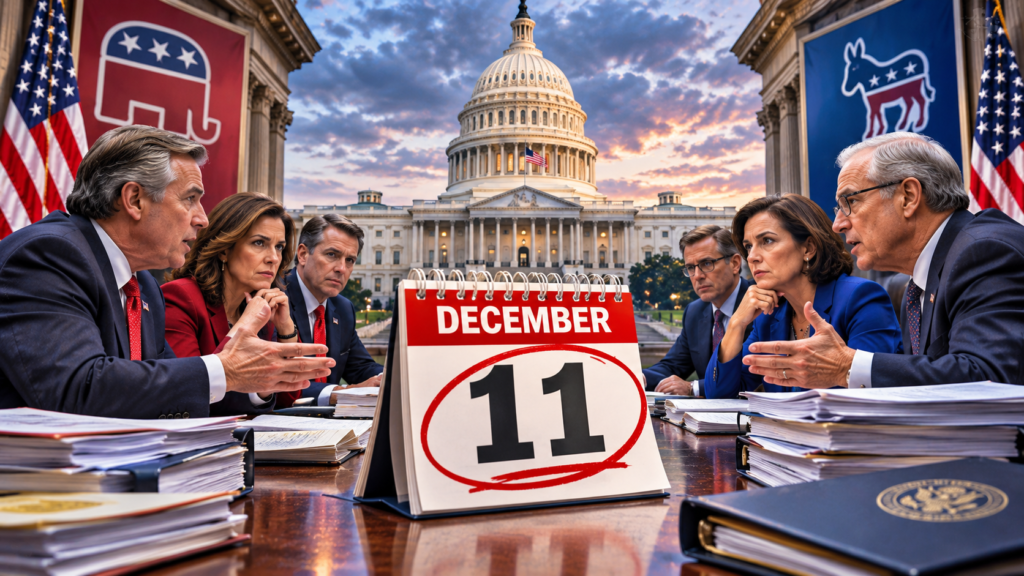
Congress has less than three weeks to prevent another potential federal government shutdown, with current funding set to expire on December 11. Negotiations remain difficult as Republicans and Democrats disagree over defense spending, the war with Iran and how long a temporary funding measure should last.
The deadline is set by a continuing resolution signed by President Donald Trump in September. The law keeps federal agencies funded through December 11, giving lawmakers additional time to complete the 12 annual appropriations bills for fiscal year 2027. If Congress does not pass new funding before the deadline, a funding gap could begin on December 12 for agencies whose budgets have not been approved.
Reuters reported on November 20 that lawmakers were warning of a possible pre-Christmas shutdown as they prepared to leave Washington for the Thanksgiving break. Senate Majority Leader John Thune said discussions were progressing, but no agreement had been reached.
Iran war becomes a major obstacle in funding talks
Democrats want any new spending agreement to address the administration’s military campaign against Iran. Some Democratic lawmakers are seeking restrictions on how federal funds can be used for offensive operations. Republicans have resisted adding those limits to the government funding bills.
The dispute has made a bipartisan deal harder to reach in the Senate, where most major spending measures need 60 votes to advance. Both parties are also weighing the political consequences of a shutdown shortly before the Christmas holiday season.
Trump’s Pentagon funding request adds pressure
Another point of disagreement is President Trump’s request for $350 billion in additional Pentagon funding. Senate Republicans are discussing a bipartisan defense appropriations package that could include about $69 billion of the requested amount, while other Republicans have considered pursuing a larger partisan spending bill.
Democrats have questioned the size and purpose of the proposed increase, particularly while the cost of the Iran conflict remains under scrutiny. Republicans argue that additional resources are needed to support military readiness and replenish equipment and weapons used during operations.
A short-term extension remains one possible option
Lawmakers may turn to another continuing resolution to keep agencies operating into early 2027. That approach would temporarily maintain government funding while leaving major spending decisions for the next Congress, when Democrats are scheduled to take control of both chambers in January.
Congress could also try to pass some full-year spending bills while extending funding for the remaining agencies. Completing all 12 appropriations bills before the deadline is considered difficult given the limited legislative calendar and the number of unresolved disputes.
A shutdown is not inevitable. Congress can still approve a temporary extension or a broader spending agreement before December 11. But unless lawmakers reach a deal, federal agencies, workers and contractors could face uncertainty just weeks before the holidays.
Sources: Reuters, November 20, 2026; Congressional Research Service, Overview of Continuing Appropriations for FY2027, September 17, 2026; The Washington Post, November 11, 2026. The December 11 deadline is established by Public Law 119-103. This article describes a potential shutdown, not a shutdown that has already begun.