
Colorado Judge Holds ICE Officials in Contempt Over Immediate Re-Arrests of Released Immigrants
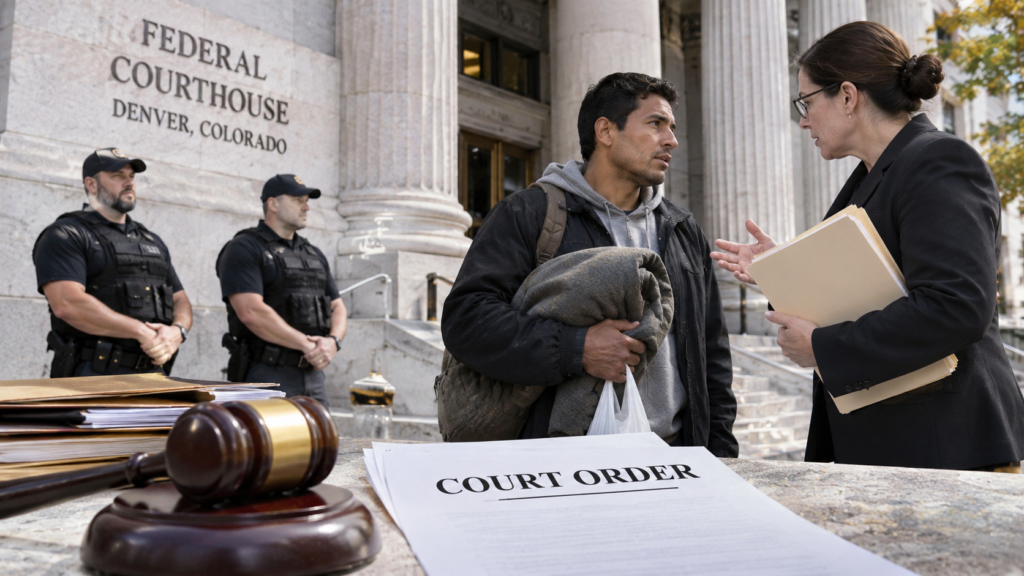
A federal judge in Colorado has held Immigration and Customs Enforcement officials and the government in contempt after finding that immigration officers repeatedly re-arrested people moments after judges ordered them released from detention. The ruling sharply criticized the practice but stopped short of imposing further sanctions because an ICE official testified that it had ended.
U.S. District Judge Charlotte Sweeney issued the 15-page order on November 18, 2026. She wrote that ICE’s approach of immediately detaining petitioners again after court-ordered releases “made a mockery” of judicial orders. The case involved a man who was re-detained shortly after a judge directed that he be released.
ICE supervisor described a practice of immediate re-arrests
During court proceedings, Acting Denver Field Office Director Nathan Rasper testified that he had given instructions beginning October 27 for staff to review certain release cases and, where they believed a new arrest was lawful, re-arrest individuals after releasing them. Rasper said he had heard from colleagues in Minnesota that a similar approach was being used there.
Assistant Field Office Director Nichole Black also testified about the practice. Judge Sweeney concluded that Black and the government had violated the court’s release order. The judge strongly rejected the idea that officers could satisfy a release order by briefly taking a person outside and then immediately placing that person back in restraints.
The judge’s order described the constitutional and legal concerns raised by the re-detentions. It also noted that the agency’s own supervisor acknowledged that ICE must follow court orders, even when officials believe they have separate statutory authority to make an arrest.
At least 18 people were affected, reports say
Colorado Public Radio reported that at least 18 people in the state had either been held longer than permitted or re-arrested within minutes of a court-ordered release during the preceding six weeks. Immigration attorneys said the number could be higher because some detainees represent themselves and may not have lawyers tracking their cases.
The reporting described cases at the federal immigration detention facility in Aurora and the Whipple Federal Building in Denver. Other federal judges in Colorado had also questioned ICE’s handling of release orders and issued decisions aimed at preventing immediate re-arrests.
Judge declines further sanctions after ICE says practice stopped
Although Sweeney found the officials and government in contempt, she declined to take further action in this case. She said the contempt had been cured after Rasper testified that he had directed the practice to stop following an earlier hearing on November 4 and that people re-arrested under the approach had been released.
The judge made clear that the government’s representation was important to her decision. The ruling does not amount to approval of the earlier conduct. Instead, it records a contempt finding while declining additional sanctions because the agency said it had stopped the practice.
ICE and the Department of Homeland Security did not immediately respond to Reuters’ request for comment on the November 18 ruling. In earlier comments reported by MPR News, an ICE spokesperson said the agency would address issues identified by the court and take action consistent with applicable law and court orders.
Why the ruling matters
The case highlights a basic issue in the U.S. legal system: government agencies must comply with court orders, including orders directing the release of people from custody. A disagreement over immigration law does not allow officials to disregard a judge’s instructions or create their own workaround.
For immigrants and their families, the practice created uncertainty even after a court had ordered release. Lawyers said people who expected to leave detention were instead taken back into custody, sometimes within minutes. The episode has also raised questions about whether similar tactics have been used in other states.
The immediate re-arrests appear to have stopped in Colorado following the court hearings, according to the testimony and local reporting. But the ruling sends a clear warning that renewed violations could bring further judicial action. The broader legal and political dispute over the Trump administration’s immigration enforcement policies is continuing.
Sources: U.S. District Court for the District of Colorado, Judge Charlotte Sweeney’s November 18, 2026 order in Case No. 1:26-cv-04891-CNS; Reuters, November 18–19, 2026; Colorado Public Radio, November 18, 2026; MPR News, November 18, 2026. The judge found contempt but declined further action after an ICE official testified that the re-arrest practice had stopped.