
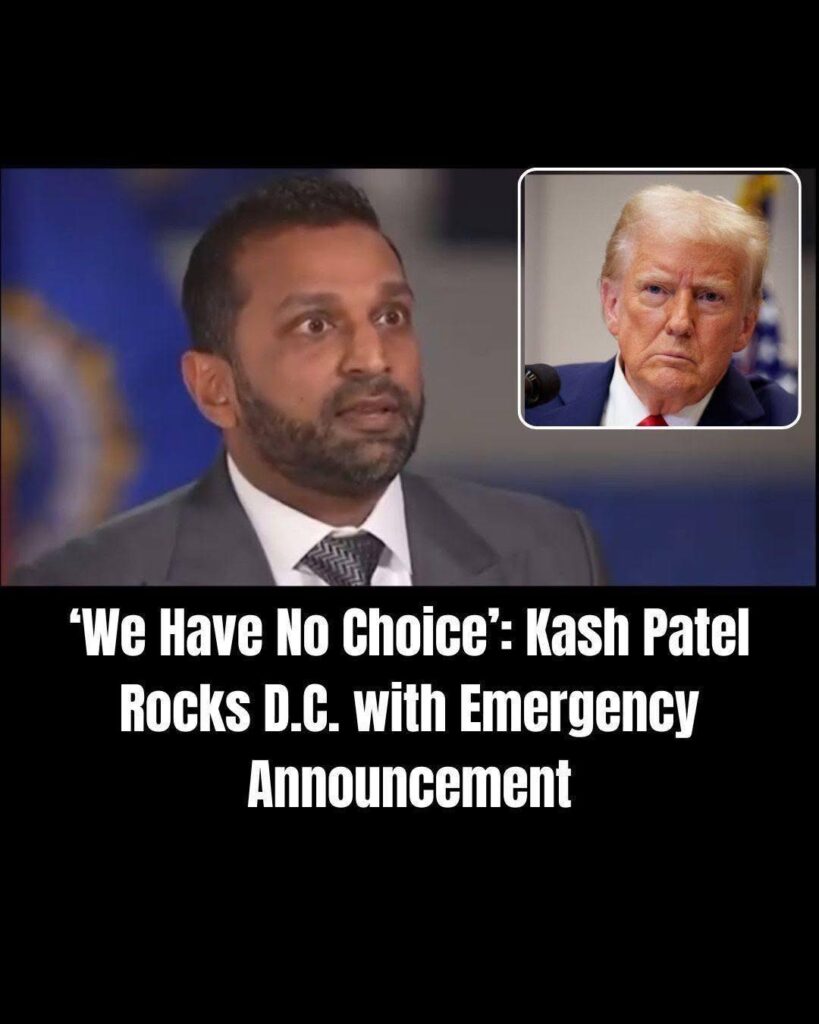
FBI Director Kash Patel suggested over the weekend that legal scrutiny surrounding former FBI Director James Comey may not be finished, even after a federal judge dismissed a high-profile perjury case against him.
Speaking in an interview with The Epoch Times, Patel made clear that he does not view the court’s decision as the end of the matter. Instead, he emphasized that federal authorities still have multiple avenues available as they continue reviewing allegations tied to Comey’s testimony before Congress.
“The judicial process can make whatever determination it wants,” Patel said. “But we at the FBI and our partners at the DOJ have numerous options to proceed, and we’re executing on all those options.”
His remarks have reignited debate over the scope of federal accountability, the limits of judicial rulings, and how far the Trump administration intends to go in revisiting controversial episodes from the FBI’s recent past.
Background: The Dismissed Case
Comey was indicted in late September in the Eastern District of Virginia on charges related to making false statements and obstruction of justice, based on allegations that he provided misleading testimony to Congress during investigations into the FBI’s handling of politically sensitive cases.
The indictment followed sustained public pressure from President Donald Trump, who has repeatedly accused Comey of abusing his position and misleading lawmakers during his tenure as FBI director.
Earlier this month, however, a federal judge dismissed the perjury case, citing legal deficiencies related to jurisdiction and evidentiary standards. While the ruling halted that specific prosecution, it did not address the broader factual allegations underlying the case.
Patel: ‘Stay Tuned’
Patel’s comments suggest the administration may not be finished examining those underlying issues.
When asked directly whether further action could be coming, Patel responded cautiously but deliberately.
“I would say stay tuned for right after Thanksgiving,” he said. “You’ll see multiple responses, in my opinion.”
Patel declined to specify whether those responses would involve new charges, congressional disclosures, internal reviews, or other legal steps. Still, his language made clear that federal authorities are continuing to evaluate the matter.
Focus on ‘Burn Bags’ and Internal Records
One of the most striking parts of Patel’s interview involved his reference to so-called “burn bags” — containers used within government agencies to dispose of sensitive documents.
According to Patel, investigators uncovered materials during internal reviews that he believes warrant further examination.
“You’re going to see everything we found in that room, in one way or another,” Patel said. “Be it through investigation, public trial, or disclosure to the Congress.”
Patel did not describe the specific contents of the materials or explain how they might relate directly to Comey. However, his comments suggest that documentation discovered during internal reviews could play a role in future proceedings or oversight actions.
Claims of Institutional Abuse
Patel went further, framing the Comey controversy as part of a broader critique of how federal law enforcement operated during a highly polarized period in American politics.
“It is the single largest weaponization and politicization of law enforcement against America,” Patel said. “Specifically targeting a political party, because the institutional elite in Washington, D.C., didn’t like them and didn’t want them to win.”
Those remarks echo long-standing claims from Trump and his allies that federal agencies were used improperly during investigations connected to the 2016 election and its aftermath.
Critics of that view argue that such claims oversimplify complex investigations and risk undermining public trust in law enforcement institutions.
Legal Experts Urge Caution
Legal analysts note that while Patel’s comments are significant, they do not necessarily signal imminent criminal charges.
“A dismissed case is not the same as an exoneration,” said one former federal prosecutor. “But any new action would still have to meet strict legal standards, particularly given the public profile of the individuals involved.”
Experts also caution that statements by executive officials must be carefully framed to avoid appearing to prejudge outcomes or exert pressure on prosecutors.
Political Context and Fallout
The Comey case remains deeply polarizing. Supporters of renewed scrutiny argue that senior officials must be held accountable if they misled Congress or abused their authority. Critics counter that continued focus on Comey risks turning law enforcement into a political battleground.
Democrats have accused the Trump administration of pursuing retribution against political opponents, while Republicans argue that accountability has been selectively enforced for years.
Patel, for his part, rejected claims of political motivation, saying the FBI’s focus is on restoring credibility and transparency.
What Could Come Next?
While Patel did not outline specific next steps, legal observers suggest several possibilities:
- Congressional disclosures related to internal FBI records
- Administrative or internal reviews within the DOJ
- Referral of findings to oversight committees
- Civil or regulatory actions, depending on the evidence
Any renewed criminal prosecution would likely face intense scrutiny and significant legal hurdles.
A Signal, Not a Verdict
Patel’s remarks stop short of announcing concrete action, but they clearly signal that the Comey matter remains under active consideration within the federal government.
For now, the former FBI director faces no active charges. Still, Patel’s comments suggest that additional information may soon become public — potentially reshaping how recent history is understood.
As Patel put it, “stay tuned.”
The Larger Question
Beyond Comey himself, the controversy touches on a broader issue confronting American institutions: how to balance accountability with independence in agencies tasked with enforcing the law.
Whether Patel’s hints lead to new legal action, congressional inquiry, or simply further disclosure, the debate over the FBI’s role in recent political history shows no sign of fading.