
House Democrats Expand Inquiry Into Trump White House Ballroom Donations as Lobbyists Face New Demands
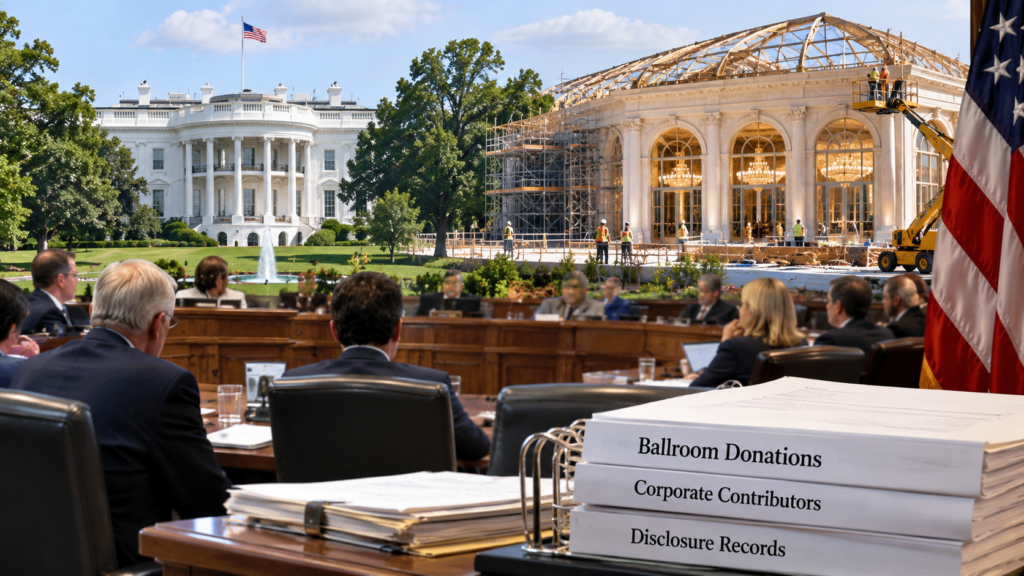
Democratic lawmakers are expanding their scrutiny of private donations for President Donald Trump’s planned White House ballroom, asking people involved in fundraising and donor coordination to preserve records and explain how corporate contributions were solicited.
The latest moves came in a series of letters in November. On November 18, Representative Robert Garcia of California, the top Democrat on the House Oversight Committee, sent a document-preservation notice to Catherine Townsend, chief executive of the Trust for the National Mall, concerning the ballroom project and its private donations. Garcia is expected to lead the committee when Democrats take control of the House next year.
Two days later, Senators Richard Blumenthal of Connecticut and Adam Schiff of California demanded records from lobbyists Brian Ballard and Reince Priebus. In a November 19 announcement, Blumenthal’s office said the senators want documents and communications about corporate contributions and efforts to solicit donations from major companies with business before the Trump administration.
Why the donations are drawing attention
The Washington Post has reported that the ballroom project has received more than $300 million in private donations. Its reporting on donor records described contributions from corporations and wealthy individuals, including some with government contracts, regulatory matters or other interests before federal agencies.
Democratic lawmakers say they want to know who approached potential donors, what they were told, whether any promises or expectations accompanied the gifts, and whether contributions affected access to the president or administration officials. Those questions are at the center of their concerns about possible conflicts of interest or pay-to-play arrangements.
These are allegations and questions raised by lawmakers, not findings that donors received favors in exchange for contributions. The letters are requests for information and preservation of records; they do not establish that a law was broken.
White House and fundraising allies reject the accusations
The White House has defended the use of private donations, arguing that the project should not have to rely on taxpayer funding. A spokesperson for fundraiser Meredith O’Rourke previously called the Democrats’ accusations absurd and baseless and said Trump cannot be bought.
Blumenthal’s November 19 announcement said the senators had previously sought information from Ballard and Priebus and were renewing their request after they did not respond. The senators set January 4, 2027, as the requested deadline for voluntary production of records and said they could consider other steps if the information was not provided.
The inquiry is likely to intensify when the new Congress convenes in January. Democrats have indicated that they may use the House Oversight Committee and Senate investigative panels to examine the fundraising structure, donor vetting, transparency and the role of intermediaries.
For now, the central issue is transparency: who gave money to the ballroom project, who arranged the contributions and whether any donor expected something in return. The answers will depend on records and testimony that lawmakers are now seeking.
Sources: U.S. Senator Richard Blumenthal’s office, November 19, 2026; The Washington Post, November 12 and November 18, 2026; NPR reporting republished by OPB, November 18, 2026. This report describes lawmakers’ inquiries and allegations, not proven misconduct.