
Jamie Raskin Demands Trump Administration Preserve Signal Messages Amid Government Records Investigation
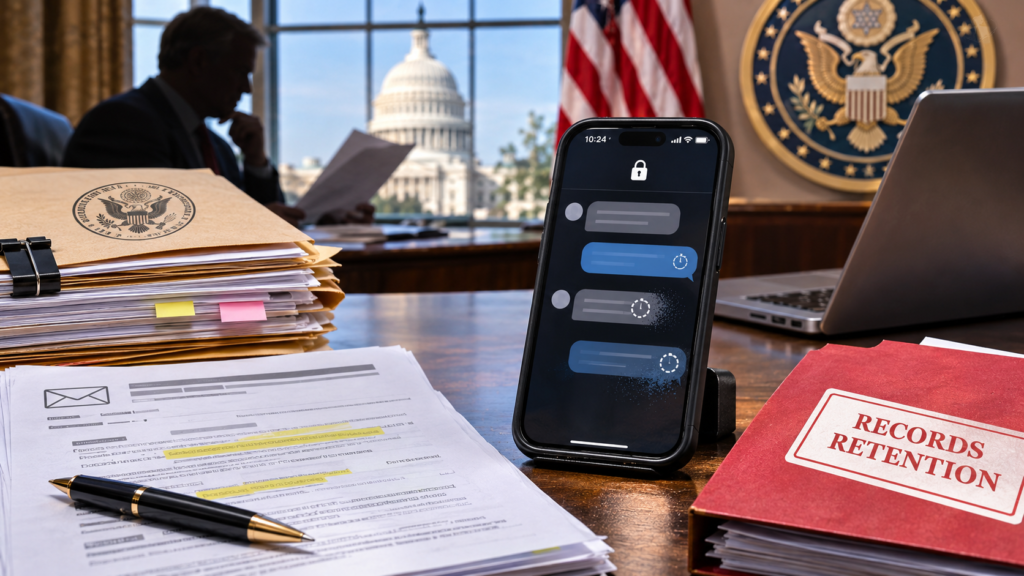
A senior House Democrat is demanding that several federal agencies preserve official communications sent through encrypted messaging apps, warning that messages configured to disappear could leave important government records unavailable for future congressional investigations.
Representative Jamie Raskin of Maryland, the top Democrat on the House Judiciary Committee and its incoming chairman, sent letters to the Justice Department, FBI, Department of Homeland Security, Immigration and Customs Enforcement and the Bureau of Prisons. The letters were made public on November 20, 2026, and ask agency leaders to preserve communications on non-government platforms and try to recover any official records that may already have been deleted.
Why Signal and disappearing messages are under scrutiny
Raskin’s concern centers on messaging services such as Signal, which offers end-to-end encrypted conversations and allows users to set messages to disappear automatically after a selected period. Other platforms named in the letters include WhatsApp, Telegram, Snapchat, Facebook Messenger, Instagram Direct Messages and X.
The issue is not simply whether government employees may use encrypted communications. The central question is whether messages that document official government business are being preserved in accordance with federal records requirements. The Federal Records Act requires agencies to maintain records documenting their functions, policies, decisions and procedures, including qualifying electronic communications.
Raskin said his committee had received reports that officials were conducting government business on platforms configured to erase messages. As an example, he cited a Signal exchange he said he obtained involving FBI General Counsel Samuel Ramer and Drew Lynch, an associate of Donald Trump Jr. The exchange reportedly discussed a potentially ongoing health-care fraud investigation. The allegations and context of that communication have not been independently established by the letters alone.
Agencies are asked to recover and preserve records
Raskin asked the agencies to take steps to preserve relevant messages, disable automatic deletion where necessary and attempt to recover records through available backups or associated metadata. The letters set a December 3 deadline for the agencies to respond.
The lawmaker argues that preserving these communications is important because Congress may need them when investigating agency decisions, law-enforcement activity and the conduct of senior officials. Democrats are preparing to take control of both chambers of Congress in January, when they expect to launch a series of oversight investigations.
White House and Justice Department reject claims of unlawful recordkeeping
The Trump administration has rejected the suggestion that it is violating federal records laws. The White House said the administration complies with applicable records-retention requirements. The Justice Department also said it follows legal requirements governing the management of records related to official functions and decisions.
The dispute follows earlier controversy over the use of Signal by senior national-security officials. In 2025, a journalist was inadvertently included in a group chat in which administration officials discussed military operations. The White House and Pentagon have said Signal is not authorized for sensitive or classified national-defense information.
Raskin’s latest letters do not establish that officials intentionally destroyed government records or that a crime occurred. They represent a demand for preservation and an effort to determine whether messages related to official business were retained properly. The agencies’ responses and any records they recover may help clarify the scope of the issue.
A larger fight over transparency and congressional oversight
The dispute highlights a broader challenge for modern government: official decisions are increasingly discussed through digital tools that were not designed as permanent public records systems. Federal agencies must balance secure communications with legal obligations to preserve information that documents government work.
As the next Congress prepares to investigate the administration, the handling of electronic messages could become a major point of conflict between lawmakers and the White House. The immediate test will be whether agencies can show that official communications were preserved and whether any missing records can be recovered.
Sources: The Associated Press, November 20, 2026; Jamie Raskin’s November 19, 2026 letters to the Justice Department, FBI and Department of Homeland Security; Al Jazeera, November 20, 2026. Allegations of record destruction have not been established as findings of fact, and the administration says it complies with federal records laws.