
Senate Passes Major Energy Bill 62-33, Sending Permitting Overhaul to House
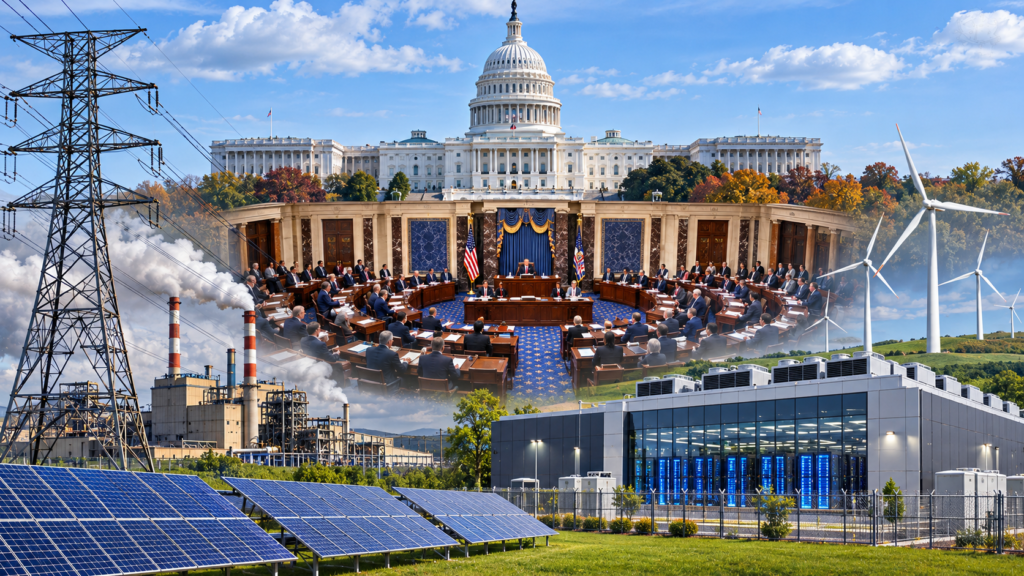
The U.S. Senate has passed a sweeping bipartisan energy and infrastructure bill designed to speed up approvals for power plants, transmission lines and other major projects, while requiring large data centers to cover more of the electricity costs they create. The measure passed 62-33 on November 19 and now moves to the House of Representatives.
The legislation, called the Bipartisan American Affordability and Jobs Act of 2026, is one of the most significant attempts in years to change the federal permitting process. Supporters say lengthy reviews and legal disputes can delay projects for years, limiting the country’s ability to expand electricity supplies as demand rises from artificial intelligence, manufacturing and other industries.
What the bill would change
The bill would set tighter timelines for federal environmental reviews and make changes to several laws governing project approvals, including the National Environmental Policy Act, the Clean Water Act and the Endangered Species Act. It also includes provisions intended to accelerate planning and construction of interstate electricity transmission lines and provide greater certainty for developers after permits are issued.
The legislation covers a wide range of energy infrastructure, including renewable energy facilities, natural gas pipelines, liquefied natural gas terminals, power plants, mining projects and electric transmission. It is not limited to one type of energy source: both clean-energy and fossil-fuel projects could benefit from faster permitting.
Large data centers would face greater responsibility for grid costs
One of the bill’s most closely watched provisions concerns large data centers, which consume substantial amounts of electricity to operate servers and artificial intelligence systems. The measure would require major data-center operators to pay a greater share of the grid upgrades needed to serve their power demand.
The issue has become politically sensitive as households face higher utility bills and communities debate the effects of new data-center construction. Supporters say requiring large users to cover more of the costs can help protect ordinary customers from paying for infrastructure built primarily to serve commercial facilities.
Bipartisan support, but environmental concerns remain
The bill was negotiated by four senators: Republicans Mike Lee of Utah and Shelley Moore Capito of West Virginia, and Democrats Martin Heinrich of New Mexico and Sheldon Whitehouse of Rhode Island. Fifteen Democrats joined most Republicans in voting yes, while two Republicans voted against the measure.
Supporters argue that faster construction could expand electricity supply, reduce bottlenecks and help keep energy affordable. They say the current permitting system can make it difficult to build the infrastructure needed to meet growing demand.
Critics warn that shortening reviews and limiting some legal challenges could weaken environmental protections and reduce opportunities for communities and tribes to raise concerns. Some opponents also argue that the bill could make it easier to approve fossil-fuel projects and threaten sensitive public lands or sacred sites.
House decision will determine the bill’s future
The legislation now faces the House, which previously passed a narrower version of permitting reform. The two chambers would need to agree on the same text before the measure could go to President Donald Trump. Trump has publicly supported the Senate effort and said he would sign it if Congress sends it to him.
The House’s next steps remain uncertain, particularly with a limited legislative calendar before the end of the year. Lawmakers will have to decide whether to accept the Senate’s broader package, revise it or pursue a different approach.
For American households, the bill’s potential impact will depend on whether it actually speeds up construction, improves grid capacity and prevents major new electricity users from shifting costs onto other customers. Even if it becomes law, the effects would take time to appear. The Senate vote is a major step, but it is not yet a final change in federal energy policy.
Sources: Reuters, November 19–20, 2026; The Associated Press, November 20, 2026; Congressional Research Service, “Bipartisan American Affordability and Jobs Act of 2026: Summary of All Sections,” November 5, 2026; U.S. Senate Committee on Energy and Natural Resources, September 30, 2026. The Senate approved the bill 62-33; House passage and presidential signature are still required before it becomes law.