
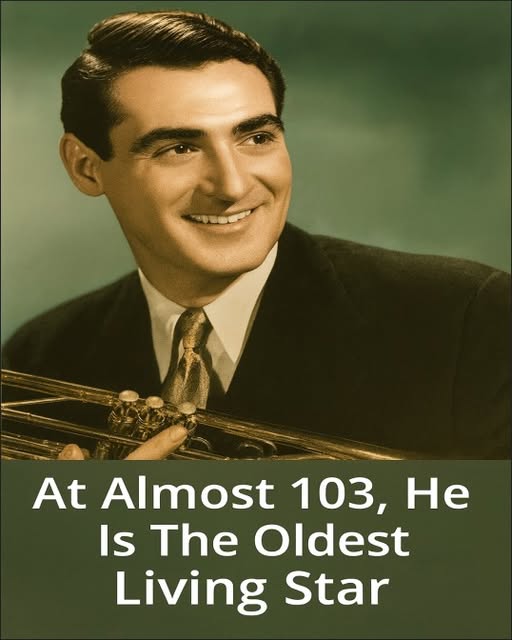
The idea of longevity is generally measured in years or even a single decade of relevance in the glamorous, usually fleeting world of Hollywood, where stars rise and fall with the pace of a passing trend. However, there is a unique group of performers whose lives and careers span not just years but whole periods of human history. These are the 100-year-old titans of the entertainment sector, the live link between the hyper-digital speed of the present day and the black-and-white grace of a bygone period. Ray Anthony, whose name is linked with the brassy, aggressive spirit of American music and the golden age of film, stands at the very top of this esteemed group. Anthony, who is over 103 years old, is more than just a survivor of a vanished world; he is a living, breathing example of an artistic commitment that never fades.
The cultural soil from whence these legends originated must be examined in order to comprehend the scope of such a life. Raw talent and a strict dedication to the craft characterized the early 20th century. There were no quick fixes for being famous or viral incidents that could propel an amateur into the public eye. Rather, there was the exhausting circuit of live performances, the smoke-filled jazz clubs, and the enormous studio system soundstages. After emerging from this ordeal as a creative conductor and trumpet prodigy, Ray Anthony went on to become one of the final remnants of the Big Band era. His career is a master study in adaptability, demonstrating that genuine creativity is a growing well that yields more insight and understanding as the years pass rather than a limited resource that dries up in old age.
These enduring performers are significant in ways that go well beyond their particular discographies or filmographies. They act as cultural archivists, preserving firsthand recollections of the changes that shaped the twentieth century. Ray Anthony is more than just a musician when he performs or appears in public these days; he is a witness to the development of the American soul. He witnessed the birth of rock and roll, the shift from radio to television, the emergence of the blockbuster, and the complete change in the way people consume art. Seeing someone like Anthony still involved and passionate is a powerful counterbalance to today’s “burnout” mentality for younger performers. His life demonstrates that the creative spirit is a lifetime fire that can be sustained by an unwavering curiosity in the medium and a sincere affection for the audience.
Among his contemporaries, Ray Anthony stands out for his unwavering vigor as he approaches his second century of life. In Hollywood, longevity is frequently accompanied by a quiet retreat into seclusion, yet Anthony has continued to be a representation of tenacity and optimism. His public persona serves as a reminder that the “Golden Age” was about more than just the attire and lighting; it was also about an unquestionable work ethic and a sense of showmanship that put the happiness of the audience first. He provides a unique window into the technical proficiency and social elegance that characterized his time by sharing his thoughts and songs. He embodies a time when being a “star” meant being a multifaceted performer who could command a screen, lead an orchestra, and effortlessly captivate an audience.
The story of the aging legend is frequently told from a nostalgic perspective, which is a sad look back at the past. But Ray Anthony’s and his peers’ story is far more about the “now.” It is about the fact that at 103, the human mind and heart are still capable of producing immense beauty and providing a sense of continuity in a fragmented world. His life is a real example of the health advantages of continuing to engage in creative endeavors. Physicians and sociologists have long observed that people who continue to pursue their passions tend to have better lives as they age. Anthony is the best example of this idea. Having a purpose—a cause to take up an instrument or go in front of a camera—is possibly the greatest source of youth ever found, as seen by his unwavering love for the trumpet and his gratitude for his followers.
These legends are also essential to maintaining the integrity of their own artistic traditions. The organic, heartfelt sound of a live large band leader serves as a reminder of the human aspect in art in a time when music is frequently quantized and fixed by algorithms. Ray Anthony’s contributions to the Great American Songbook are more than just artifacts; they serve as guidelines for using melody and rhythm to arouse feelings. By continuing to be active, he makes sure that the subtleties of his style are preserved in the cultural discourse rather than being lost to history books. He promotes a conversation between the past and the future, encouraging contemporary musicians to consider the roots of their genres in order to discover fresh inspiration.
Our shared optimism is also reflected in the public’s infatuation with Anthony’s longevity. The sight of a 103-year-old man exuding such dignity and brilliance is a potent subversion of stereotypes in a society that frequently marginalizes the elderly. He demonstrates that growing older is a process of becoming more of who you are rather than a process of vanishing. Having spent more than eight decades navigating the highs and lows of a notoriously volatile sector, his narrative is one of perseverance. He managed to preserve his personality and his happiness despite the big bands’ demise, the 1960s’ shifting tastes, and the complete transformation of the music business.
Ray Anthony is a shining example in the entertainment industry today. He serves as a reminder that as technology advances, people’s need for rhythm, storytelling, and connection never goes away. His legacy is the encouragement he offers to everyone who dread the passing of time, not just a list of hits or a star on a pavement. He demonstrates to us that if you pursue your passion with all of your heart, the years won’t bring you down; rather, they will uplift you. Ray Anthony is more than just a historical figure; he is a symbol of the future, demonstrating that the most exquisite note is frequently the one that is held for the longest. He continues to educate us through his music and his very being that life, like a great performance, is about the grace and passion you bring to every beat along the road rather than how quickly you reach the end.