
Trump’s GAO Nominee Eric Ueland Faces Tough Senate Questions Over Independence of Government Watchdog
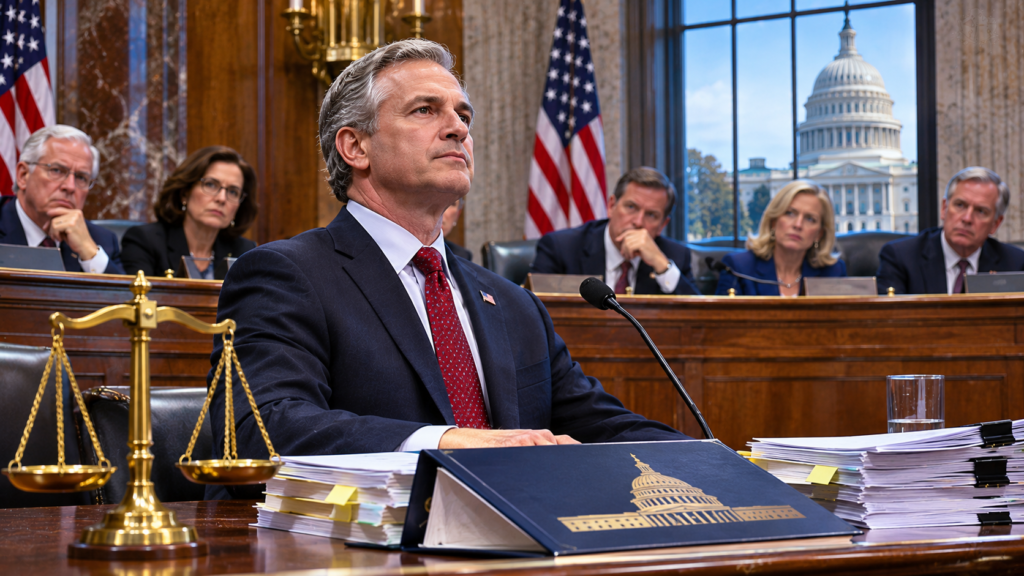
President Donald Trump’s nominee to lead the Government Accountability Office faced pointed questions from senators on November 19, as Democrats and several government-watchdog veterans raised concerns about whether a senior White House budget official could independently oversee the administration.
Eric Ueland, currently the deputy director for management at the Office of Management and Budget, has been nominated to serve as comptroller general for a 15-year term. The position leads the Government Accountability Office, Congress’s principal investigative and auditing agency, which examines federal spending and evaluates whether government programs are operating lawfully and effectively.
At his confirmation hearing before the Senate Homeland Security and Governmental Affairs Committee, Ueland rejected suggestions that he would simply follow the wishes of the White House. He told senators he was not a “plant, a stooge, a lackey for anybody,” and said he would make independent judgments based on the law and evidence.
Democrats question his ability to oversee his former colleagues
Democratic senators focused on Ueland’s current role at OMB, an agency that has clashed repeatedly with GAO over access to information and the administration’s handling of funds approved by Congress. GAO has issued findings that the administration violated the Impoundment Control Act by withholding or canceling appropriated money.
Senator Gary Peters, the committee’s ranking Democrat, questioned how Ueland could lead an independent watchdog after serving as a senior official in an agency whose actions GAO has investigated. Ueland said he deliberately had not reviewed some of GAO’s previous findings on OMB so he would not prejudge matters if confirmed.
Ueland also told the committee that GAO would continue responding to congressional requests and pursuing information when agencies resist oversight. He said his responsibility would be to apply the law and provide Congress with independent analysis.
Twenty-one former inspectors general oppose the nomination
A group of 21 former federal inspectors general urged senators to reject Ueland’s nomination in a letter dated November 17. They raised concerns about the process used to select him, his independence and potential conflicts of interest. The former watchdogs argued that the comptroller general must be able to challenge executive-branch actions without political pressure.
The controversy also involves the process used to recommend candidates. Federal law provides for a bipartisan, bicameral commission to recommend at least three candidates to the president. Democrats say the usual safeguards were bypassed and that minority-party members were not given a meaningful role in the process. Republicans and the committee chairman have disputed aspects of that criticism.
Some Republicans also want closer scrutiny
Concerns have not come only from Democrats. Republican Senator Thom Tillis questioned whether the nomination should be considered in a group with other nominees, saying it deserved individual scrutiny. Senator John Curtis also expressed concern that the selection could appear too partisan for a position that is expected to remain independent across administrations.
Ueland has held senior roles in both the executive and legislative branches. His background includes work at OMB, the State Department and the White House, as well as senior staff positions in the Senate. Supporters point to that experience as evidence that he understands how Congress and federal agencies operate.
Nomination remains pending
The Senate committee has not yet voted on whether to advance Ueland’s nomination. A committee vote is expected in early December, but no specific date had been announced as of November 21. The full Senate would still need to confirm him before he could take the 15-year post.
The outcome matters because GAO plays a central role in congressional oversight of federal spending and executive-branch decisions. The debate is not only about Ueland’s qualifications; it is also about how to protect the independence of an institution whose work often places it in conflict with the administration it examines.
Sources: Associated Press, November 20, 2026; Federal News Network, November 19, 2026; U.S. Senate Committee on Homeland Security and Governmental Affairs, November 19, 2026; Project On Government Oversight, November 18, 2026. Ueland’s nomination remains pending and has not been confirmed.