
Venezuelan Migrants Face Deportation Uncertainty After Appeals Court Keeps TPS Protections Frozen
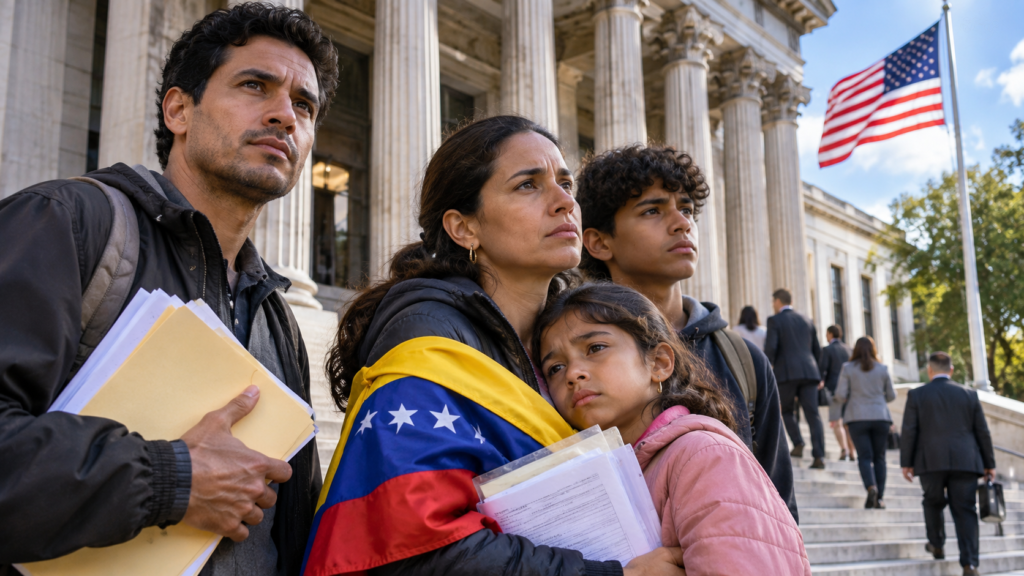
Hundreds of thousands of Venezuelan migrants in the United States are facing continued uncertainty after a federal appeals court extended a temporary freeze on a lower-court ruling that would have restored their Temporary Protected Status (TPS). The decision allows the Trump administration to continue enforcing the termination of the protections while the legal fight moves forward.
The Ninth U.S. Circuit Court of Appeals issued its order late November 18, 2026, providing that the administrative stay will remain in place until seven days after the court publishes its full judgment. The move came hours after the Justice Department asked the Supreme Court to intervene, arguing that the temporary pause was about to expire and could require the government to release Venezuelans from immigration detention and halt some deportations.
Justice Department withdraws emergency Supreme Court request
After the Ninth Circuit extended its stay, the Justice Department withdrew its emergency application from the Supreme Court on November 19. In a letter to the court, Solicitor General D. John Sauer said the appeals court’s action had changed the circumstances that prompted the administration’s request. The government said it could seek further relief from the Supreme Court if the Ninth Circuit later rules against it.
The withdrawal does not mean the administration has restored TPS for Venezuelans. The appeals court’s temporary order keeps the protections from taking effect while the case remains under review. The next major development will be the Ninth Circuit’s full decision on the merits of the dispute.
What is Temporary Protected Status?
Temporary Protected Status is a federal program created by Congress in 1990. It can allow eligible people from countries affected by armed conflict, natural disasters or other extraordinary conditions to remain temporarily in the United States and obtain work authorization. TPS does not automatically provide permanent residency or citizenship.
Venezuela was first designated for TPS in March 2021, and the designation was expanded in September 2023. About 600,000 Venezuelans received protections under the two designations. The Trump administration moved to end the 2023 designation, arguing that Venezuela no longer met the statutory requirements and that the program should remain temporary.
Immigrant advocates challenged the termination in court. A federal judge in California ruled that the administration’s action was unlawful and set it aside. The government appealed, and the case has moved between the Ninth Circuit and the Supreme Court through a series of emergency orders and remands.
Thousands have faced detention and removal proceedings
Federal attorneys told the courts that about 1,800 Venezuelans were in immigration detention and that roughly 330 people were subject to removal proceedings or final removal orders. The administration argued that restoring TPS could require releases from detention, delay deportations and lead to the issuance of work authorizations.
For migrants and their families, the legal uncertainty affects more than their ability to remain in the country. Work authorization tied to the terminated TPS designation is no longer valid for many beneficiaries, leaving people uncertain about employment, housing and family finances. Some Venezuelans have left the United States voluntarily, while others continue to challenge their cases through the immigration and federal court systems.
Advocates for TPS holders say the administration’s actions have separated families and exposed some migrants to serious risks. The government argues that it is applying the law and that the TPS designation should not continue when the statutory conditions are no longer met. Those competing positions remain at the center of the litigation.
The Ninth Circuit’s next ruling could change the situation again
The appeals court is reviewing the case after the Supreme Court vacated an earlier Ninth Circuit judgment and sent the dispute back for reconsideration in light of a separate decision involving TPS. The court has set an expedited process, but the November administrative stay means the lower-court ruling will not restore protections before the appeals court issues its judgment and the seven-day period expires.
For now, Venezuelan TPS holders should not assume that the recent court activity has automatically reinstated their immigration status or work authorization. Individual circumstances can differ, and people affected by the decision should rely on official court and immigration-agency updates and seek qualified legal advice about their own cases.
The case remains one of the most consequential immigration disputes of the year. Its outcome could determine whether hundreds of thousands of Venezuelans regain temporary deportation protection or continue facing the consequences of the administration’s termination decision.
Sources: Associated Press, November 19, 2026; U.S. Department of Justice, November 19, 2026 letter in Mullin v. National TPS Alliance, No. 26A714; U.S. Court of Appeals for the Ninth Circuit, November 18, 2026 order; UCLA School of Law, November 18, 2026. The stay is temporary and the Ninth Circuit’s full ruling remains pending.