
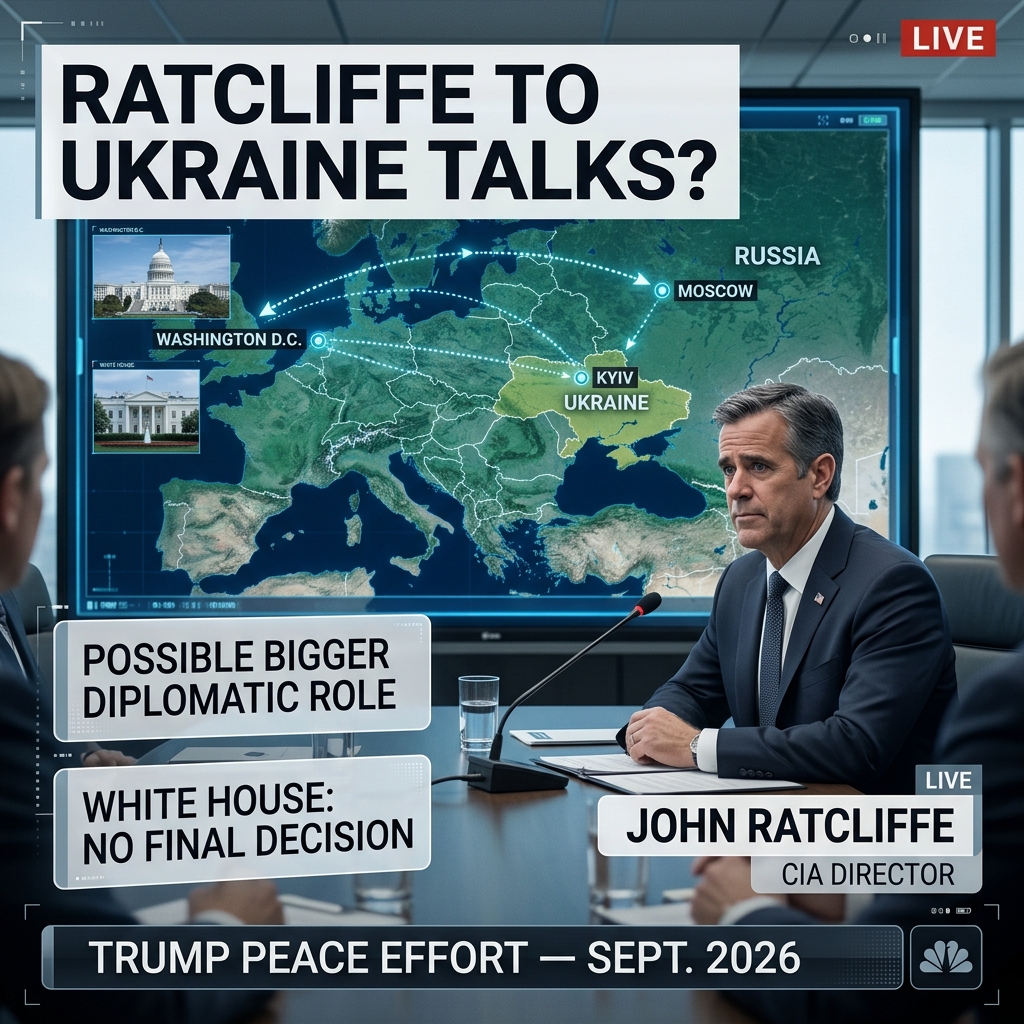
The Trump administration may be considering a bigger diplomatic role for CIA Director John Ratcliffe as Washington tries to restart stalled negotiations between Russia and Ukraine.
The possible shift could represent a significant change in how the White House approaches the war.
According to the Financial Times, U.S. officials have told European counterparts that Ratcliffe could become more involved in negotiations with Moscow and Kyiv. The report said the White House was considering reducing the roles of Special Envoy Steve Witkoff and Jared Kushner.
However, the plan does not appear to be finalized.
The CIA has denied the report, while people familiar with the situation have said Trump has not made a final decision.
Why Ratcliffe Matters
Ratcliffe is not a traditional diplomat.
As CIA director, he oversees one of America’s most important intelligence organizations.
That gives him access to information about Russia, Ukraine and the military situation that ordinary diplomats may not have.
His potential involvement could therefore bring a more intelligence-driven approach to negotiations.
The White House may believe that better intelligence understanding could help determine whether Moscow is genuinely interested in a peace agreement.
Trump Wants Results
Trump has repeatedly promised to end the Russia-Ukraine war.
The administration has already invested significant diplomatic effort in negotiations.
Witkoff and Kushner have been involved in discussions with both sides.
But progress has been limited.
Trump recently said Putin wants a deal, but U.S. and European officials remain skeptical about Moscow’s intentions.
That creates pressure on the administration to find a new strategy.
A Possible Diplomatic Shake-Up
If Ratcliffe takes a larger role, it could signal that Trump wants to restructure the negotiating team.
That does not necessarily mean Witkoff and Kushner would completely disappear from the process.
Instead, the administration could divide responsibilities differently.
Ratcliffe could focus on intelligence and security issues while other officials continue political negotiations.
Russia’s Position
Russia continues to demand major concessions from Ukraine.
The Kremlin’s position includes territorial and security demands that Kyiv has rejected.
That makes negotiations extremely difficult.
A successful agreement would require Russia to accept conditions it currently opposes or Ukraine to make concessions it has repeatedly rejected.
Ukraine’s Position
Ukraine wants security guarantees and continued Western support.
Kyiv is also seeking protection against future Russian attacks.
A peace deal that simply stops the fighting without providing security assurances could leave Ukraine vulnerable to another conflict.
That is one of the reasons Ukrainian officials have been cautious about negotiations.
Could Intelligence Help?
Intelligence could play an important role in determining whether diplomatic promises are credible.
For example, U.S. intelligence agencies can analyze Russian troop movements, military production and other indicators.
That information can help negotiators determine whether Moscow is preparing for peace or another military operation.
But intelligence cannot solve political disagreements.
Even if both sides know exactly what the other is doing, they still have to agree on territory, security and the future political relationship between Russia and Ukraine.
Europe Is Watching
European governments are closely watching Washington’s strategy.
European officials have their own security interests in the conflict.
They are concerned that any settlement could create long-term security problems for the continent.
According to the Financial Times report, some European officials viewed Ratcliffe’s possible involvement positively because they hope a new approach could revive stalled negotiations.
The Biggest Challenge
The biggest obstacle remains trust.
Russia and Ukraine have almost completely lost trust in each other’s intentions.
Ukraine fears that Russia could use negotiations to reorganize its forces.
Russia argues that Western military support allows Ukraine to continue fighting.
The United States therefore faces the difficult task of convincing both sides that negotiations are worth pursuing.
What Comes Next?
The White House has not confirmed a final decision about Ratcliffe’s role.
If Trump formally expands his involvement, the move could become one of the most important changes in America’s Ukraine policy.
It would also demonstrate that the administration is willing to experiment with its negotiating strategy.
For now, however, diplomacy remains uncertain.
Trump says Putin wants a deal.
Ukraine wants stronger pressure on Russia.
Russia continues military operations.
And American negotiators are still trying to bridge the enormous gap.
The potential involvement of Ratcliffe could change the structure of the negotiations, but it cannot guarantee a peace agreement.
The ultimate outcome will depend on whether Moscow and Kyiv are willing to compromise on the fundamental issues that have kept the war going.