
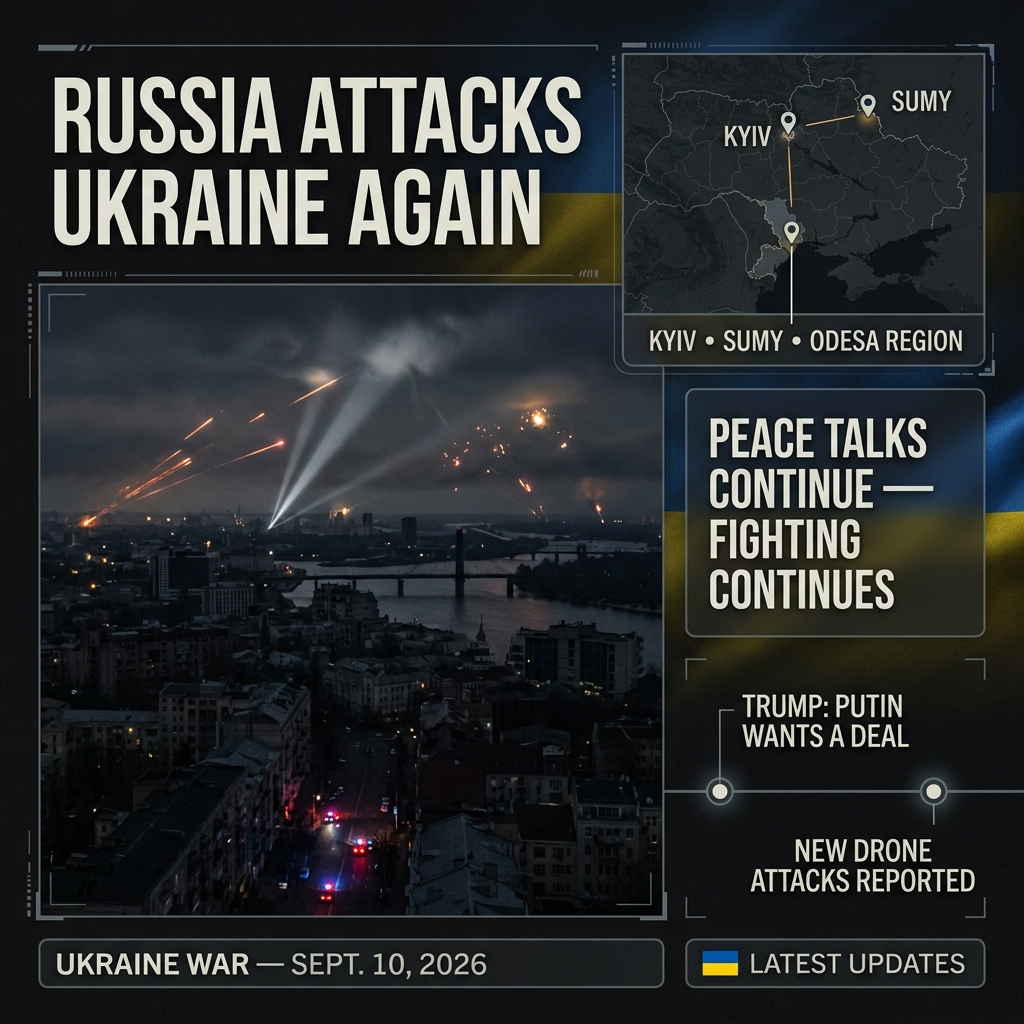
Russia launched another wave of drone attacks against Ukrainian targets as diplomatic efforts to end the war continue to face major obstacles.
Ukrainian officials reported casualties from attacks in several locations, including Kyiv, Sumy and the Odesa region.
Reuters reported that Russian drones struck a border crossing between Ukraine and Moldova, killing two people, while another strike in Sumy killed two people and injured 20. One person was also reported killed in Kyiv.
The attacks came at a particularly sensitive moment.
President Donald Trump has publicly said Russian President Vladimir Putin wants to make a deal to end the war.
But military activity on the ground continues to tell a different story.
Trump Says Putin Wants a Deal
Trump said Wednesday that he believes Putin wants to reach an agreement with Ukraine.
The president described his recent conversation with Putin positively and suggested that negotiations could move forward if Ukrainian President Volodymyr Zelenskyy is also prepared to negotiate.
Trump’s comments came after American diplomatic efforts involving special envoy Steve Witkoff and Jared Kushner.
However, U.S., Ukrainian and European officials remain skeptical about whether Moscow is genuinely prepared to make the concessions required for a lasting peace.
That skepticism is one of the biggest obstacles facing the diplomatic process.
Fighting Continues
While politicians discuss negotiations, Russian and Ukrainian forces continue military operations.
The latest Russian attacks demonstrate how difficult it is to separate diplomacy from battlefield activity.
Ukraine has repeatedly argued that Russia uses military pressure to strengthen its negotiating position.
Moscow has made its own demands and has shown little indication that it is prepared to accept all of Kyiv’s conditions.
That leaves the two sides far apart.
The Border Attack Raises Concern
The attack near the Ukraine-Moldova border is particularly significant because the area is important for transportation and trade.
Russia has increasingly targeted infrastructure connected to Ukraine’s economy.
Attacks against ports, warehouses and logistics centers can affect both military supply chains and civilian commerce.
The goal may therefore extend beyond immediate battlefield targets.
Damaging transportation infrastructure can make it harder for Ukraine to export goods and maintain economic activity.
Civilian Costs Continue
The latest casualties also highlight the continued risk to Ukrainian civilians.
After more than four years of full-scale war, millions of Ukrainians remain affected by repeated missile and drone attacks.
Residential areas, transportation infrastructure and commercial facilities have all been damaged throughout the conflict.
Air-defense systems have become one of Ukraine’s most important military priorities.
Zelenskyy has repeatedly asked Western allies for additional air-defense capabilities, particularly ahead of winter.
The Winter Problem
Winter creates another strategic challenge.
Ukraine’s energy infrastructure has repeatedly been targeted during the war.
Cold weather increases demand for electricity and heating, making damage to power infrastructure especially dangerous.
A large Russian campaign against energy facilities could put additional pressure on Ukrainian civilians.
That is why Kyiv is seeking additional air-defense support before the coldest months arrive.
U.S. Diplomacy Faces a Test
The Trump administration wants to show that American diplomacy can end the war.
But the latest attacks demonstrate the difficulty of achieving that objective.
If Russia continues attacking Ukraine while negotiations are being discussed, Ukrainian officials may become less willing to compromise.
At the same time, Moscow may believe that continued military pressure improves its negotiating position.
That creates a dangerous cycle.
Diplomacy requires both sides to believe that a deal is better than continued fighting.
Neither side currently appears fully convinced.
What Does Putin Want?
Trump says Putin wants a deal.
But the more difficult question is what kind of deal Putin wants.
Russia has demands concerning territory, security arrangements and Ukraine’s future relationship with Western countries.
Ukraine has rejected territorial concessions that would permanently surrender Ukrainian land.
That disagreement goes directly to the heart of the conflict.
Zelenskyy’s Position
Zelenskyy has repeatedly called for stronger international pressure on Russia.
Ukraine wants security guarantees and continued military support.
Kyiv also wants negotiations to produce a durable settlement rather than simply pause the fighting.
Those differences will make any future peace agreement extremely difficult.
Could Talks Resume?
Russia has indicated that it hopes U.S.-mediated negotiations can resume.
But there has been no major breakthrough.
The previous rounds of diplomatic discussions produced limited progress, including discussions about prisoner exchanges and other humanitarian issues.
A broader political agreement remains much harder.
The Road Ahead
The next several weeks could become critical.
If the United States increases diplomatic pressure on both Moscow and Kyiv, negotiations could potentially accelerate.
But if Russia continues major attacks and Ukraine continues refusing territorial concessions, the talks may remain stuck.
The latest strikes are therefore important not only because of the immediate casualties but because they show how far the battlefield and diplomatic positions remain apart.
For now, Trump’s claim that Putin wants a deal provides some hope.
But the continuing attacks show that a peace agreement remains far from certain.