
Democrats Expand Investigation Into Trump’s White House Ballroom Donations, Demand Lobbyists’ Records
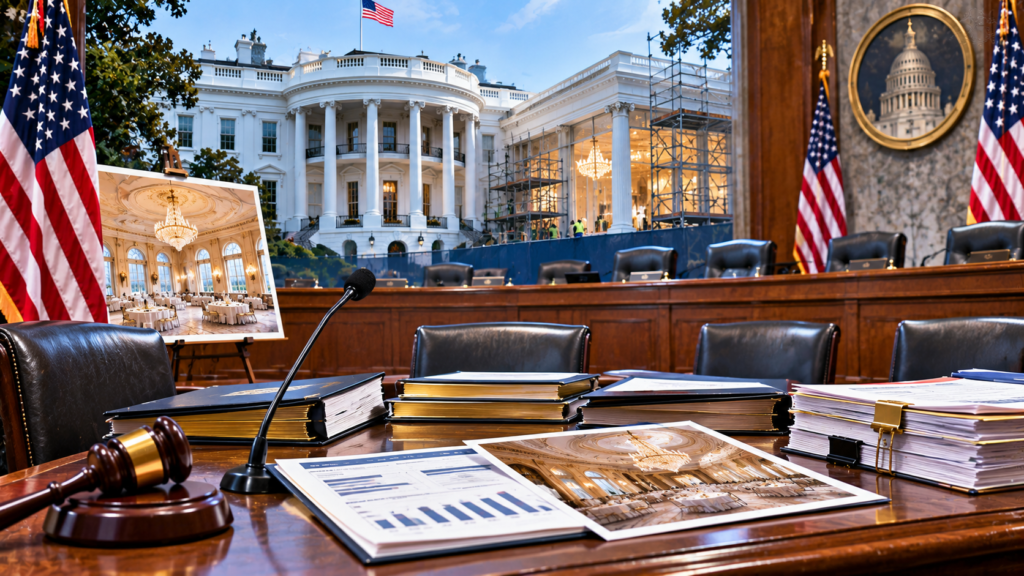
Congressional Democrats are expanding their investigation into private donations for President Donald Trump’s proposed White House ballroom, asking lobbyists and fundraising intermediaries to turn over records about how corporate contributions were solicited and whether donors expected anything in return.
On November 19, Senators Richard Blumenthal and Adam Schiff sent new letters to Brian Ballard, president of Ballard Partners, and Reince Priebus, chairman of the board of advisers at Michael Best Strategies. The senators requested documents, communications and information about the lobbyists’ roles in securing donations from major companies and other contributors.
The senators said the fundraising pipeline raises questions about potential conflicts of interest, particularly where donors have business before the federal government. They asked for information about who was approached, what was said during fundraising discussions and whether any promises or expectations were connected to the contributions. The letters are requests for information; they do not establish that a donor received an improper favor.
Why the ballroom donations are drawing scrutiny
The White House ballroom project is being financed through private donations rather than a direct congressional appropriation. A Washington Post investigation published in October identified major contributors, including companies and individuals with government contracts, regulatory matters or other interests before the administration. The report said the donors had pledged more than $300 million in total.
Democrats argue that large private gifts to a project associated with the president can create the appearance of pay-to-play politics, especially when contributors may benefit from federal decisions. They want to determine whether donors were offered special access or whether donations were linked to policy, regulatory or contracting outcomes.
The White House and representatives of the fundraising operation have rejected accusations that the president can be influenced by donations. A spokesperson for fundraiser Meredith O’Rourke said Trump is grateful to contributors but “can’t be bought.” The administration has argued that private funding avoids placing the cost of the project on taxpayers.
Democrats are preparing broader oversight for 2027
The latest letters are part of a wider effort by Democrats to prepare investigations before they take control of Congress in January. On November 11, Blumenthal, Senator Elizabeth Warren and Representative Robert Garcia asked O’Rourke to explain her fundraising role, identify people and companies she solicited, and provide details about meetings between Trump and executives she approached.
On November 18, Garcia also asked the Trust for the National Mall to preserve records and communications related to the ballroom’s financing and construction. The trust has said its role was limited to receiving and managing charitable donations as a nonprofit partner of the National Park Service, and that it did not solicit donations or oversee design and construction.
Blumenthal and Schiff said the lobbyists had not adequately responded to earlier requests. Their November 19 letters ask the recipients to confirm by November 23 that they will comply and to provide the requested records by December 18. The senators warned that they may consider other ways to obtain the information if the records are not voluntarily produced.
What the investigation has—and has not—established
At this stage, the congressional effort is an inquiry into fundraising practices and possible conflicts of interest. The public record described in the letters and reporting does not prove that a company donated in exchange for a government decision, nor does it establish that Trump or any donor committed a crime.
The central questions are whether fundraising intermediaries made promises, whether donors sought or received special access, and whether any official action was influenced by contributions. Documents and responses from the lobbyists, donors and nonprofit organizations could help lawmakers determine whether further investigation is warranted.
With Democrats preparing to lead key congressional committees in 2027, the ballroom project is likely to remain part of a broader fight over ethics, transparency and presidential fundraising. For now, the senators are seeking records and explanations—not announcing a final finding of wrongdoing.
Sources: U.S. Senators Richard Blumenthal and Adam Schiff, November 19, 2026 letters to Brian Ballard and Reince Priebus; The Washington Post, November 12, 2026, reporting on the inquiry into Trump fundraiser Meredith O’Rourke; The Washington Post, October 21, 2026, reporting on ballroom donors; Representative Robert Garcia, November 18, 2026 records-preservation request. The allegations are under inquiry and have not been established as findings of wrongdoing.