
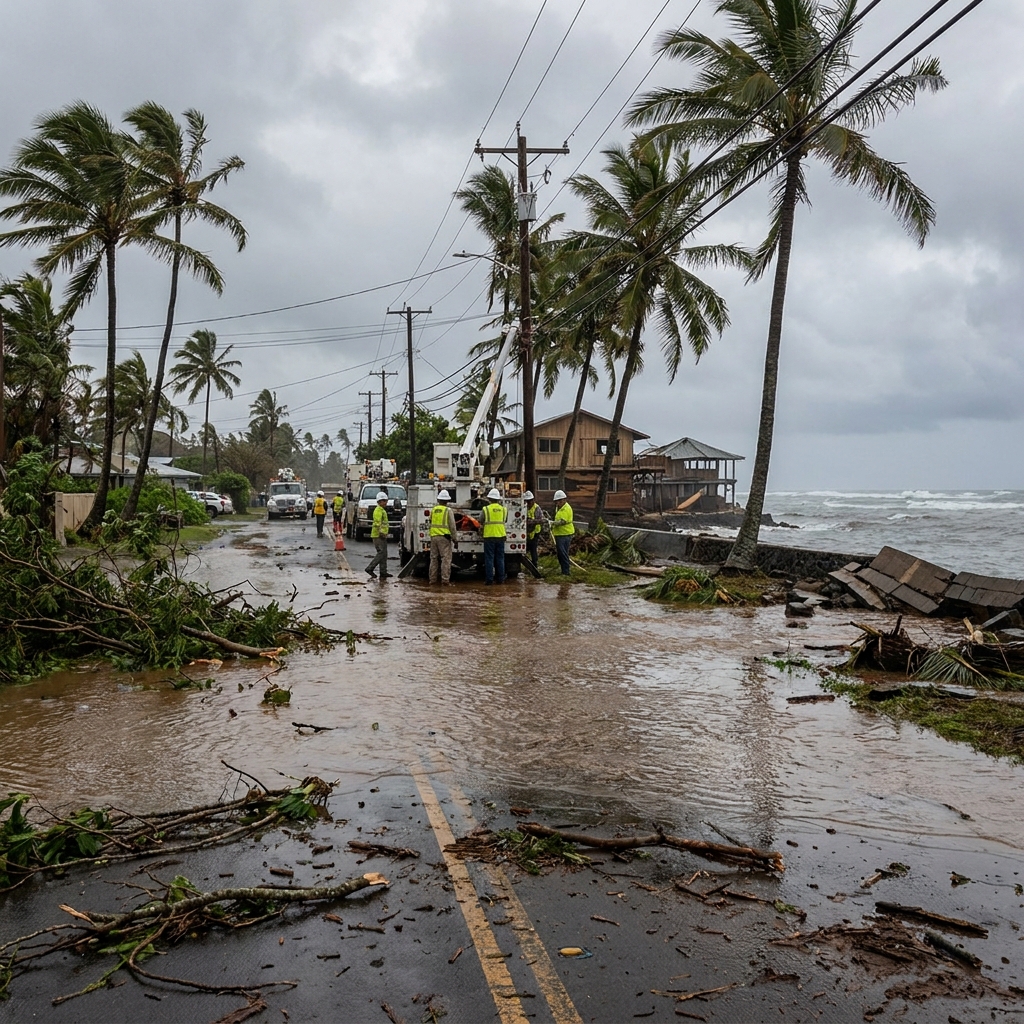
HONOLULU — Communities across Hawaii are beginning the difficult process of recovering from Tropical Storm Lowell after the system brought strong winds, heavy rain, flooding and major disruptions to parts of the islands.
Although Lowell did not make a direct landfall over Hawaii, the storm still produced dangerous conditions.
Reports indicated significant impacts on western islands, including Kauai and Niihau, while Oahu also experienced heavy rain and coastal flooding.
The storm has weakened as it moved away, but officials and residents continue to deal with the consequences.
Kauai Hit Hard
Kauai experienced some of the most visible impacts.
The storm brought heavy rainfall, strong winds and coastal waves that caused flooding and infrastructure damage.
The Guardian reported that nearly all of Kauai’s approximately 35,000 power customers lost electricity at one point as the storm passed west of the island.
Some roads became difficult or impossible to travel because of flooding and debris.
Power outages also affected homes and businesses.
For residents, the challenge quickly shifted from preparing for the storm to cleaning up afterward.
Coastal Damage
Storm surge and large waves created additional problems along exposed coastal areas.
Reports described damage to boats, piers and waterfront infrastructure.
The combination of wind, waves and heavy rainfall can be especially dangerous for island communities because many roads and critical facilities are located close to the coast.
Even when a storm center stays offshore, its outer bands can create serious impacts.
That was the case with Lowell.
Oahu Also Experienced Problems
Oahu, home to the state’s largest population center, also experienced heavy rain and coastal flooding.
The Guardian reported at least one death connected to the storm’s impacts.
Flooding can remain dangerous even after the strongest winds have disappeared.
Fast-moving water can cover roads, damage vehicles and create hazardous conditions around streams and drainage channels.
Residents are therefore being urged to remain cautious while cleanup continues.
Lowell Is Weakening
The National Hurricane Center reported that Lowell was gradually weakening as it moved farther into the Pacific.
At one point, sustained winds were around 60 mph, with the storm forecast to weaken further.
The latest forecast indicated the storm was turning westward.
There were no coastal watches or warnings in effect in the cited National Hurricane Center advisory.
That does not mean all danger disappears immediately.
Flooding, damaged roads, downed power lines and debris can remain dangerous long after a storm moves away.
Why Hawaii Is Particularly Vulnerable
Hawaii’s geography creates unique challenges during tropical weather.
The islands are surrounded by ocean, meaning communities can be exposed to powerful waves and coastal flooding.
Mountainous terrain can also increase rainfall in certain locations.
When heavy rainfall combines with steep slopes, flooding and landslides can become serious concerns.
Infrastructure recovery can also take longer because equipment and supplies may have to be transported between islands.
Residents Face a Long Cleanup
For families who lost electricity, the first priority is restoring basic services.
Power companies must inspect lines and equipment before restoring electricity.
Road crews must remove debris and assess damage.
Emergency workers may also need to inspect bridges, drainage systems and coastal facilities.
Businesses face their own challenges.
Restaurants, stores, hotels and small businesses can lose income when roads close or power remains unavailable.
Tourism is particularly important to Hawaii’s economy, making storm disruptions economically significant even when damage is localized.
A Reminder About Tropical Weather
Lowell is another reminder that Hawaii can experience dangerous tropical weather even when a storm does not directly strike an island.
Residents and visitors often focus on the storm’s center.
But the most dangerous impacts can occur hundreds of miles away.
Rain bands, ocean swells and strong winds can spread well beyond the center.
That is why emergency officials monitor tropical systems long before they approach the islands.
What Happens Next?
The immediate focus is recovery.
Crews will continue clearing roads, restoring electricity and assessing structural damage.
Residents will also have to inspect homes and property for water damage and other hazards.
Officials typically advise people to avoid downed power lines and flooded roads.
Even after skies clear, hidden hazards can remain.
For Hawaii, the end of Lowell’s strongest weather marks the beginning of another phase: rebuilding.
The storm may continue weakening over the Pacific, but its effects on communities can last much longer.
For residents who spent the past several days preparing for dangerous weather, the priority now is getting back to normal safely.
Source context: National Hurricane Center/NOAA storm advisories and reporting on impacts in Hawaii.